
Introduction
On page SEO guide strategies help website owners improve search visibility, attract targeted visitors, and create a better experience for readers. Many beginners focus only on backlinks or social media promotion, but strong on page SEO creates the foundation that supports every successful digital marketing campaign. Without proper optimization, even high quality content may struggle to rank on search engines.
A practical on page SEO guide teaches you how to optimize titles, headings, keywords, internal links, images, and website structure. It also explains how search engines understand your content and how users interact with your pages. When these elements work together, your site becomes easier to crawl, faster to load, and more valuable for visitors.
Today, search engines prioritize helpful content, user intent, and page experience. That means website owners must focus on both technical optimization and reader satisfaction. Whether you run a blog, business website, or affiliate platform, learning on page SEO can increase traffic and improve long term growth.
What is On Page SEO?
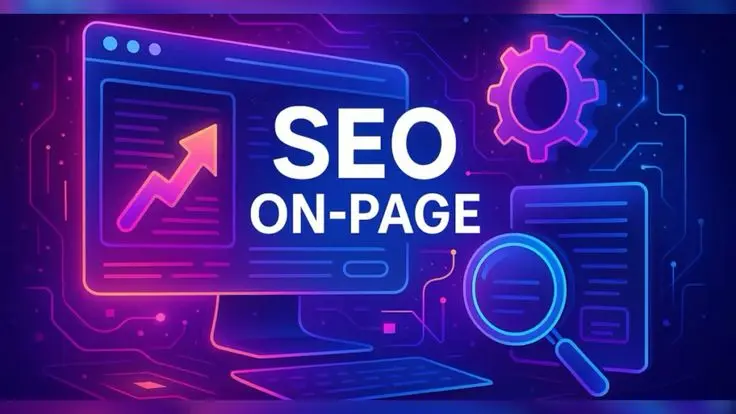
On page SEO refers to all optimization activities performed directly on a webpage to improve its ranking and visibility in search engines. These optimizations help search engines understand your content while making the page more useful for readers.
Unlike off page SEO, which focuses on backlinks and external signals, on page SEO concentrates on elements within your website. This includes keyword placement, headings, content quality, page speed, image optimization, internal linking, mobile friendliness, and user experience.
A good on page SEO guide explains how each page should target a specific topic and satisfy user intent. For example, if someone searches for beginner fitness tips, the page should provide useful, organized, and easy to understand information related to fitness basics.
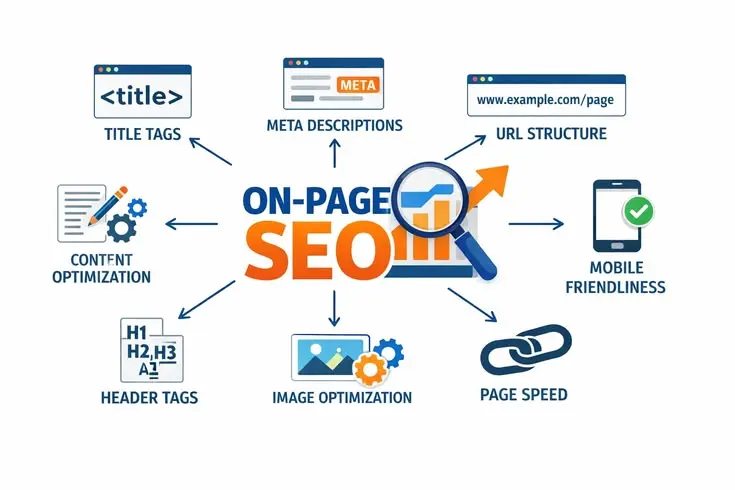
Important on page SEO elements include:
- Title tags
- Meta descriptions
- Header structure
- URL optimization
- Keyword usage
- Internal links
- Image alt text
- Content readability
- Mobile responsiveness
- Page loading speed
When these factors are optimized correctly, search engines can index your pages more efficiently and users can navigate your website with ease.
Why is On Page SEO Important?
On page SEO is important because it directly affects how search engines and users interact with your website. Even the best products or services may remain hidden if your pages are not optimized properly.
Search engines analyze many page level signals to determine whether your content deserves a high ranking. A detailed on page SEO guide helps website owners improve these signals and increase organic visibility.
Here are several reasons why on page SEO matters:
- It improves search engine rankings
- It increases organic website traffic
- It helps users find relevant information quickly
- It enhances website usability
- It supports better conversion rates
- It strengthens website authority
- It improves mobile user experience
- It reduces bounce rates
For example, a fast loading article with clear headings and useful content will usually perform better than a poorly structured page. Search engines reward pages that provide value and maintain high user engagement.
In addition, proper on page SEO makes your content future proof. Search engine algorithms continue to evolve, but helpful and optimized content remains valuable over time.
Detailed Step by Step Guide
Perform Keyword Research
Keyword research is the foundation of every effective on page SEO guide. Before creating content, identify the words and phrases your audience searches online.
Use keyword research tools to find terms with good search volume and reasonable competition. Focus on keywords that match user intent instead of choosing only highly competitive phrases.
For example, instead of targeting a broad keyword like “SEO,” you can target “on page SEO guide for beginners.” Long tail keywords often attract more targeted visitors.
Optimize the Title Tag
The title tag is one of the most important ranking factors. It tells search engines and users what the page is about.
Create titles that are clear, engaging, and keyword focused. Keep the title under sixty characters so it displays properly in search results.
A strong title example is:
“Complete On Page SEO Guide for Beginners”
This title includes the main keyword naturally while remaining attractive to readers.
Write a Strong Meta Description
A meta description summarizes the content of your page. Although it may not directly affect rankings, it improves click through rates.
Write a compelling description that includes the target keyword naturally. Keep it under one hundred fifty five characters and encourage users to visit the page.
Use Proper Heading Structure
Headings organize content and improve readability. Use one H1 heading for the page title and multiple H2 and H3 headings for sections and subsections.
A clean heading structure helps both readers and search engines understand your content hierarchy.
Avoid using headings only for styling purposes. Every heading should describe the following section accurately.
Create High Quality Content
Content quality is the heart of successful SEO. Search engines prioritize useful, original, and informative pages.
Write content that answers user questions completely. Avoid thin articles with little value. Instead, provide detailed explanations, examples, and actionable advice.
A strong on page SEO guide should include clear language, logical flow, and practical insights. Readers should leave the page feeling informed and satisfied.
Optimize Keyword Placement
Keywords should appear naturally throughout the page. Place the primary keyword in important areas such as:
- The title
- Introduction
- Headings
- URL
- Meta description
- Conclusion
However, avoid keyword stuffing because it harms readability and may trigger search engine penalties.
Improve URL Structure
Short and descriptive URLs perform better than long confusing links.
Good URL example:
example.com/on-page-seo-guide
Poor URL example:
example.com/post?id=45829seo
Clean URLs help users understand page content before clicking.
Add Internal Links
Internal links connect different pages within your website. They improve navigation and help search engines crawl your content.
For example, if you write about keyword research, you can link to another article about content marketing strategies.
Internal linking also keeps visitors on your site longer, which can improve engagement metrics.
Optimize Images
Images make content visually appealing, but large files can slow down your website.
Compress images before uploading them and use descriptive file names. Add alt text that explains the image clearly for accessibility and SEO benefits.
Proper image optimization improves both page speed and user experience.
Focus on Mobile Friendliness
Most internet users browse websites on mobile devices. Search engines prioritize mobile friendly pages because they improve usability.
Ensure your website adapts properly to different screen sizes. Text should remain readable without zooming, and buttons should be easy to tap.
A responsive design improves engagement and reduces bounce rates.
Increase Page Speed
Website speed significantly affects rankings and user satisfaction. Slow pages frustrate visitors and increase abandonment rates.
You can improve speed by:
- Compressing images
- Reducing unnecessary scripts
- Using browser caching
- Choosing reliable hosting
- Minimizing redirects
Fast websites provide smoother experiences and often achieve higher conversions.
Improve Readability
Readable content keeps users engaged longer. Use short paragraphs, simple sentences, and transition words to create a smooth reading experience.
Avoid overly technical language unless your audience expects it. Break complex ideas into smaller sections and use bullet points where helpful.
Optimize for User Intent
User intent refers to the reason behind a search query. Some users want information, while others want products or services.
Your content should match the intent behind the keyword. If someone searches for a tutorial, provide a detailed guide instead of a sales page.
Search engines reward pages that satisfy user expectations effectively.
Add Schema Markup
Schema markup helps search engines understand your content better. It can improve search appearance with rich snippets such as ratings, FAQs, or product details.
Although schema requires some technical knowledge, it can enhance visibility and click through rates.
Update Content Regularly
SEO is not a one time process. Search trends and algorithms change frequently, so outdated pages may lose rankings.
Review old articles regularly and update statistics, examples, keywords, and formatting when necessary.
Fresh content signals relevance and improves long term performance.
Benefits of On Page SEO
Effective on page SEO provides several advantages for websites and businesses.
- Improves search rankings
- Increases organic traffic
- Enhances user experience
- Builds website authority
- Supports higher conversions
- Reduces bounce rates
- Encourages longer session duration
- Makes content easier to understand
- Helps search engines crawl pages efficiently
- Strengthens content relevance
A detailed on page SEO guide can help website owners create sustainable growth strategies that continue generating traffic over time.
Disadvantages and Risks
Although on page SEO is highly beneficial, there are some risks and challenges associated with poor implementation.
- Keyword stuffing can reduce readability
- Over optimization may trigger penalties
- Excessive plugins can slow websites
- Poor mobile design can hurt rankings
- Duplicate content can confuse search engines
- Weak content may fail to engage users
- Ignoring updates can reduce visibility
These risks can usually be avoided by following ethical SEO practices and focusing on user value instead of manipulation.
Common Mistakes to Avoid
Many beginners make preventable SEO mistakes that limit their results.
One common mistake is targeting too many keywords on a single page. This confuses search engines and weakens content relevance. Focus on one main keyword and a few related terms instead.
Another mistake is publishing thin content. Articles with little information rarely rank well because they fail to satisfy user intent.
Ignoring mobile optimization is also harmful. Since mobile traffic dominates online browsing, non responsive websites lose both visitors and rankings.
Some website owners also forget internal linking. Without internal links, users and search engines may struggle to navigate your content properly.
Using duplicate title tags and meta descriptions can create indexing problems. Every page should have unique optimization elements.
FAQs
What is the difference between on page SEO and off page SEO?
On page SEO focuses on optimizing elements within your website, such as content, titles, keywords, and page speed. Off page SEO focuses on external factors like backlinks, brand mentions, and social signals.
How long does on page SEO take to show results?
Results vary depending on competition, website authority, and content quality. In many cases, noticeable improvements appear within several weeks or months after optimization.
Can beginners learn on page SEO easily?
Yes. A beginner friendly on page SEO guide simplifies the process and explains each concept step by step. With regular practice, most people can understand the basics quickly.
How many keywords should I use on one page?
Focus mainly on one primary keyword and several related secondary keywords. Avoid unnatural repetition because search engines prioritize readability and user value.
Does page speed affect SEO rankings?
Yes. Search engines consider page speed an important ranking factor because fast websites provide better user experiences and lower bounce rates.
Why are internal links important?
Internal links help users discover related content and assist search engines in crawling your website. They also distribute authority between pages more effectively.
Expert Tips and Bonus Points
Always prioritize readers before search engines. Helpful content naturally performs better because users spend more time engaging with it.
Use analytics tools to monitor traffic, bounce rates, and user behavior. These insights reveal which pages need improvement.
Study competitor pages that rank highly for your target keywords. Analyze their structure, content depth, and optimization techniques to identify opportunities.
Write compelling introductions that encourage readers to continue exploring the page. A strong opening reduces bounce rates significantly.
Include actionable examples whenever possible. Real examples improve understanding and increase trust.
Avoid copying content from competitors. Originality is essential for long term SEO success and credibility.
Conclusion
A complete on page SEO guide provides the knowledge needed to improve search rankings, attract targeted visitors, and build a stronger online presence. By optimizing titles, headings, keywords, images, page speed, and user experience, website owners can create pages that perform better in search engines and deliver more value to readers.
Successful SEO is not about manipulating algorithms. Instead, it focuses on understanding user intent and providing clear, helpful, and engaging content. Websites that prioritize quality and usability usually achieve better long term results than those relying on shortcuts or outdated tactics.
Beginners should start with the fundamentals, including keyword research, content structure, and mobile optimization. Intermediate users can expand their strategies by improving technical performance, schema markup, and content updates. Small improvements made consistently often produce significant results over time.